
Building trust and improving learning outcomes trauma affected students
Contributed by Becca Stachowicz, UMass graduate student and ILI volunteer.
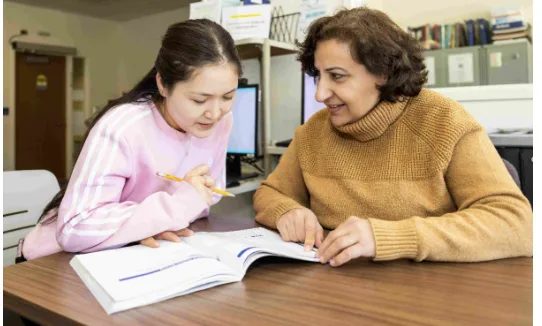
Building trust and improving learning outcomes with students who have experienced trauma can be challenging, but it is achievable and can make a significant difference to their educational experience.
Trauma-informed pedagogy is the practice of working with students with experiences of trauma in mind. Core values of trauma-informed practices include safety, trustworthiness, choice, collaboration, empowerment, and peer support as well as cultural, historical, and gender issues. Trauma-informed pedagogy is necessary for all learners!
In a 2016 world mental health survey, 70% of adults across 24 countries reported experiencing at least one traumatic event. Another 30.5% reported exposure to four or more traumatic events. Creating a foundation of safety for learning can improve learning outcomes for people with experiences of trauma.
Because of its ability to foster learning, many have written about trauma-informed pedagogy practices over the years. The book Too Scared To Learn from 1997 is an important seminal work, but there have been notable developments since then, including Zaretta Hammond’s Culturally Responsive Teaching and the Brain. The latter work synthesizes the principles of cultural humility and trauma-informed pedagogy effectively. The practice of cultural humility incorporates self-reflection, continuous learning, viewing cultural differences through the lens of lived experiences, and questioning structural power dynamics. Most current recommendations incorporate culturally humble practices within the umbrella of trauma-informed pedagogy given that trauma can stem from social inequities.
In considering social inequities, it is important to examine your own biases. An article in the journal Behavioral Sciences stresses the importance of critical reflection. They suggest people in positions of power “critically examine their own power and…be comfortable with sharing power”. It might not seem like you hold a position of power as a tutor, but even speaking the majority language of an area provides you with social capital that your student may not hold. Looking at your position as a volunteer tutor as a partnership with your student can help balance power. Treating your student as the expert of their life, their experiences, and what they need to learn is also important.
Simple ways to get started:
You don’t need to overhaul your tutoring approach—small, intentional strategies can help create a more supportive and responsive learning environment.
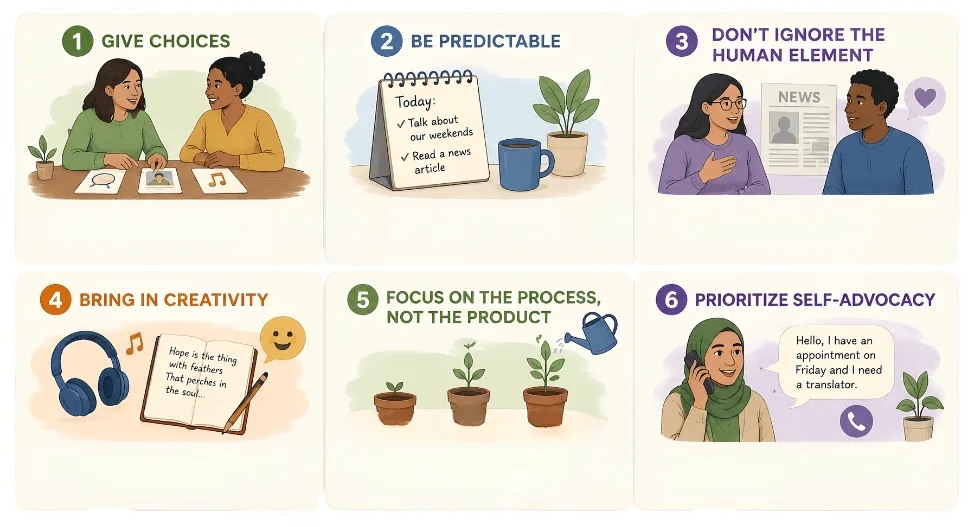
- Give choices. One thing that can foster a sense of safety is having agency. Let a student choose when and where to meet. If you plan a few activities, let them pick which one to start with. If they want to do something different, do something different.
- Be predictable. If you have an idea of what you’d like to work on, let the student know what you’re thinking. For example, “I thought we could talk about our weekends and then read this news article.”
- Don’t ignore the human element. For example, if you read the news together, acknowledge the people affected by the story. Acknowledge bias and openly name it.
- Consider incorporating music, humor, poetry, and/or storytelling into your sessions. Talk about the lyrics to a student’s favorite English language song or have the student translate one from their home language, then listen to it!
- Focus on the process, not the product. If a student seems discouraged, help them remember their “why” or help them set smaller goals to build toward a larger one. Be sure to remind them of how far they’ve come already.
- Prioritize self-advocacy. Working towards navigating difficult and potentially stressful conversations can help your student to feel empowered. Does your student have a doctor’s appointment coming up? Practice calling the doctor’s office ahead of their appointment to request a translator.
Hearing that the majority of people have experienced at least one traumatic event can make us feel powerless. However, we can control how we approach partnerships with our students and our own learning through the practice of cultural humility and through advocating for trauma-informed learning within and outside of the tutoring session.
Becca Stachowicz is an ILI volunteer tutor. After teaching English in the US and abroad for more than a decade, Becca is now completing a graduate degree in speech language pathology at UMass. In her free time, she enjoys reading speculative fiction, making art, and taking Spanish classes at ILI.
References
Benjet, C., Bromet, E., Karam, E. G., Kessler, R. C., McLaughlin, K. A., Ruscio, A. M.,Koenen, K. C. (2016). The epidemiology of traumatic event exposure worldwide: results from the World Mental Health Survey Consortium. Psychological Medicine, 46(2), 327–343. http://doi.org/10.1017/S0033291715001981
Hammond, Z. (2014). Culturally responsive teaching and the brain: Promoting authentic engagement and rigor among culturally and linguistically diverse students. Corwin Press.
Harper G.W., Neubauer L.C. Teaching during a pandemic: A model for trauma-informed education and administration. Pedagog. Health Promot. 2021;7:14–24. doi: 10.1177/2373379920965596.
Henshaw, L. A. (2022). Building trauma-informed approaches in higher education. Behavioral Sciences, 12(10), 368.
Horsman, J. (2013). Too scared to learn: Women, violence, and education. Routledge.
Mays, I. (2021). How faculty can support college students’ mental health this fall (opinion). Inside Higher Ed | Higher Education News, Events and Jobs. https://www.insidehighered.com/views/2021/07/08/how-faculty-can-support-college-students%E2%80%99-mental-health-fall-opinion