
Speaking your way from beginner to bilingual
As an adult, you may feel that if you didn’t learn a language as a kid, it’s too late now.
But it’s not too late. Though it may not be as easy for a 30-year-old as a three-year-old, it is possible–and rewarding.
Here in the US, it has become increasingly important to learn Spanish in order to communicate with our neighbors. Learning Spanish, French, Portuguese, Italian, German also opens doors to international travel and work opportunities.
Maybe you’re aiming to travel, connect with others, or boost your career–these are all benefits from learning a second language.

The good news? Anyone can become bilingual with the right approach. It’s not about being “gifted”—it’s about following smart strategies and staying consistent. If you’ve ever wondered how to learn a language fast, you’ll be encouraged to know that progress often comes quicker than expected when you use the right methods and join a communicative language class.
While there are no shortcuts to fluency, here are some ideas about how to learn a language fast and effectively.
Is language learning a matter of ability or working hard?
Perseverance beats talent when it comes to learning a second language.
Some people believe that only those with a “natural talent” can master another tongue. In reality, research shows that motivation, practice, and persistence are far more important than innate ability. This is especially true when you learn Spanish, French, or Portuguese in a classroom setting with a communicative approach.
If you’ve asked yourself, “how long does it take to learn a second language?”—the answer depends on how much time you dedicate and how effective your methods are.
You need lessons led by an experienced instructor that go through 3 basic stages: structured practice, freer practice, and free production–which is the approach of a communicative language class.
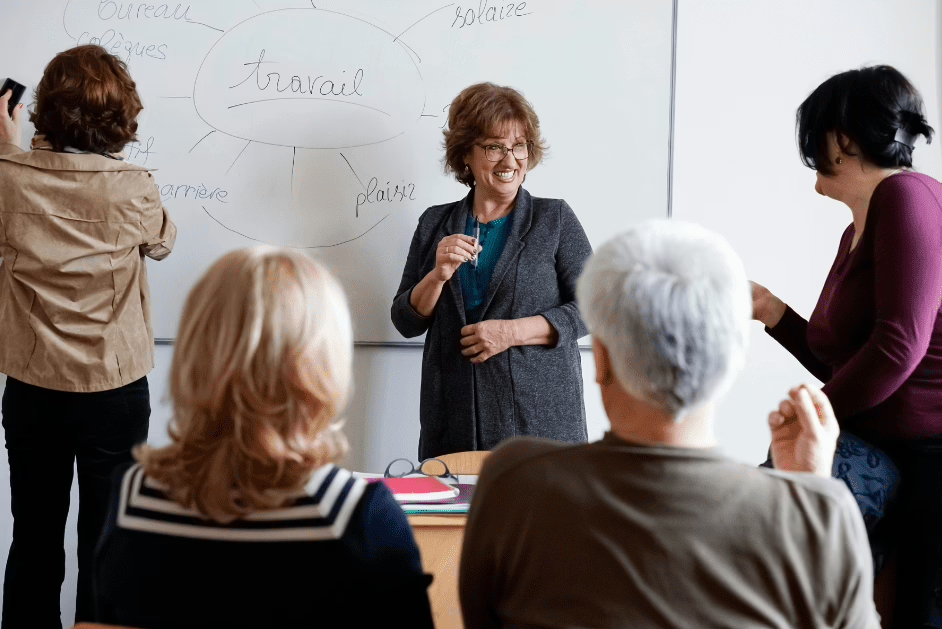
The more regularly you practice in a logical order in order to produce natural language with fellow learners and an instructor, the faster you’ll notice improvement. That’s why taking classes in a group setting (online or in-person) can be more effective than solo study
Apps and AI-driven programs may make promises about how to learn a language fast, but a lot of that is wishful thinking. Yes, it may take a short time to memorize sentences to get by in a foreign-language setting. But that’s not what it means to truly learn a language. Reciting the phrase “Excuse me, why is the bathroom” does not answer the question “Why is learning a second language important?”
How does language learning benefit brain development?
One of the pressing personal and medical issues nowadays stem from aging. Brain health ranks high among benefits from learning a second language.

Studies reveal that bilingual individuals often have better memory, sharper problem-solving skills, and greater mental flexibility. One of the biggest benefits of learning a second language is the way it strengthens your mental agility, stamina, and strength.
So, if you’re wondering, how does learning a second language improve your memory?– it’s because your brain is constantly exercising when you switch between languages. Muscles atrophy without exercise, and your brain is a muscle that needs to stretch, lift, and carry in order to stay in shape.
Children and adults alike gain lifelong cognitive advantages, proving why learning a second language is important not just for communication, but for mental health and brainpower too.
Top tips for mastering a new tongue
Tip 1: Immerse yourself daily
The best way to learn a second language quickly is to surround yourself with it. Watch movies, listen to music, or change your phone’s settings to the target language. Daily exposure helps you think in that language naturally. Joining Portuguese classes, taking private French lessons, or enrolling in a Spanish course provides the consistent schedule you need to learn a language fast.
Tip 2: Speak from day one
Don’t wait until you feel “ready.” The best age to learn a second language is now. The sooner you start speaking—even with mistakes—the faster you’ll improve. Talking to native speakers or practicing with classmates builds confidence and fluency. In-person or online language classes provide a comfortable way to start speaking right away. It’s important to take risks by speaking from day one.
Tip 3: Use memory techniques
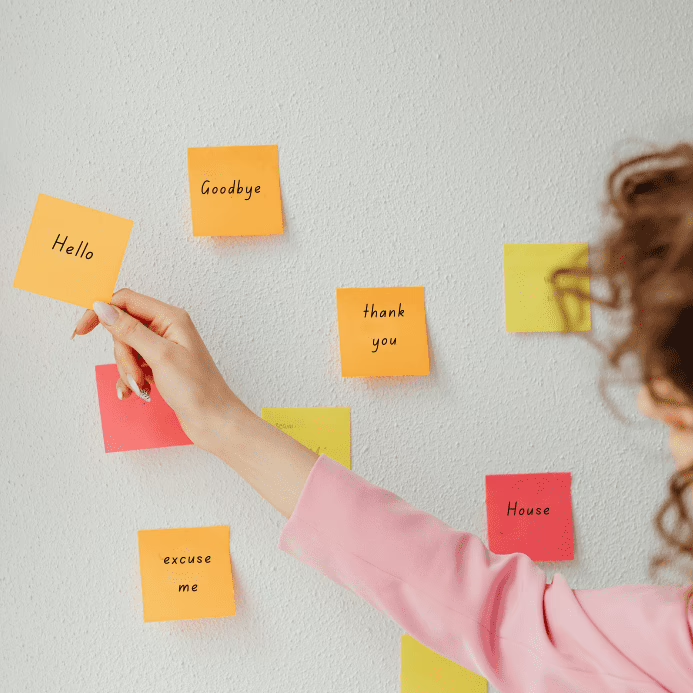
When you’re on your own, try flashcards, spaced repetition apps, or associating words with images. These techniques boost recall and make vocabulary stick. Better yet, join intensive, part-time, or private language classes with an experienced instructor, who can guide you through new techniques, such as storytelling rods, 4-part picture stories, and acronyms.

Tip 4: Set realistic, consistent goals
Instead of asking, “what’s the best age to learn a second language?” focus on building consistent habits right now. Short daily practice (15–20 minutes) is often more effective than occasional long sessions.
Early morning is a good time to practice pronunciation because your mouth is relaxed and ready to learn new formations. Keep a card with five key words or phrases next to your bed side and practice speaking them out loud for a couple minutes every morning. Note that you do it every morning–consistency is key.
Tip 5: Make it personal and fun
Choose topics that matter to you—like food, hobbies, or travel. Or make it ever more specific to your personal passions: early French film, Chilean poetry, or German beermaking. In the classroom, don’t be afraid to practice new language points by discussing your hobby horses, anything from sewing to gaming to birdwatching. You’ll better remember vocabulary if you connect it to a pet project rather than a generic topic.
Whether you’re learning for personal growth, professional success, or pure curiosity, remember: anyone can succeed. Stay consistent, stay curious, and you’ll discover just how quickly progress comes.
Related Articles
- Learning History Through Language: My ILI Experience
- Grant-Funded Language Learning Makes a Difference—Here’s How
- Best Way to Learn a Language: At Home or Through Immersion Abroad?
- How Much Time Does It Take to Learn a Language?
- How to Conquer Common Challenges Faced by Language Learners
- Why Study a Language in Western Massachusetts? Here are 11 Reasons